Does my child need MIPS in their cycle helmet?
If you’re looking to buy your child a cycle helmet you may have seen some (usually more expensive) kids bike helmets fitted with something called MIPS.
In this article we’ll take a closer look at what MIPS actually is, whether you need it in your child’s cycling helmet.
What is MIPS and does my child need it in their helmet?
MIPS stands for Multi-directional Impact Protection System.
The company that produces MIPS claim it “reduces head trauma in the event of head to hard surface interaction” - basically meaning it may help reduce brain injury if you fall off your bike and hit your head on the ground.
It does this by mitigating the “rotational shearing force of an angled blow to the head” This is a common real world scenario in many head injuries as you don’t tend to hit your head straight – instead suffering a side blow as you land.
Essentially MIPS is a very thin additional layer that sits inside the cycle helmet that is designed to add protection during certain types of impact.
It’s often bright yellow as you can see in the illustration above as well as in this particular kids helmet.
or sometimes is grey/black as shown here. This has had the comfort pads removed - you can see the velco pads attached to the MIPS.
It’s interesting to know that the MIPS company was founded by a Swedish neurosurgeon rather than a helmet manufacturer.
Hans von Holst had seen many patients with brain injuries who had been wearing helmets at the time of their accidents. He began to research how helmets were designed and where improvements in could be made to reduce injuries.
The resulting MIPS system is licensed for use by helmet manufacturers worldwide and over the years has evolved to have solutions for different uses including cycling, snow and motorsports, equestrian and industrial use.
There’s loads more information about how MIPS works and the testing they’ve undertaken on their website.
Does MIPS work?
Obviously, every head injury is going to be different, and there’s no one way of ensuring that there’s no long-term damage done.
MIPS claims to provide additional protection during particular types of impact and the fact that it’s been adopted by so many of the world’s leading helmet manufacturers is a sign it’s well thought of within the industry.
Do I need MIPS in my kids cycle helmet?
MIPS is now finding its way into kids cycling helmets which is a good thing, but it does usually come at an additional cost.
It also needs to work alongside the other fundamentals of kids cycle helmet safety.
We’ve outlined them in more detail in other articles, but you need to make sure that:
1) You measure your child’s head accurately and buy a helmet that fits them properly - our article How to measure your child's head for a bike helmet explains all
2) You buy a helmet that meets appropriate safety standards - we've detailed what these are in our post Safety standards to look out for when buying a kids bike helmet
3) You fit the helmet correctly to their head (this is where a lot of people go wrong) - read Is your child’s bike helmet fitted correctly? if you're in any doubt.
4) Your child actually wants to wear the helmet!
If you do all the above, and also have MIPS within the helmet, then there’s potentially an additional level of protection should your child ever have the misfortune to suffer an angled blow to their head.
If you buy a MIPS helmet that is too big for your child and/or that you don’t fit and tighten properly to their head, then it may well not provide adequate protection in any form of accident. If they don't find it comfortable, or just hate the look of it, then they're less likely to want to wear it.
You also need to make sure your child doesn’t try and pull at the MIPS layer and dislodge it. The bright colour is attractive, as is the gap between the MIPS and the helmet. It’s probably best to keep a MIPS cycle helmet purely for cycling in rather than other forms of play!
More helmet advice:
- How to measure your child's head for a bike helmet
- Safety standards to look out for when buying a kids bike helmet
- Is your child’s bike helmet fitted correctly?
- Afro hair and kids bike helmets
- How to keep your child's head warm under their cycle helmet
- Should my child wear a bike helmet?
- Cycle helmets for older kids and young teens; a group test
Cycle Sprog's most popular articles
Here at Cycle Sprog we help thousands of families each week find the information they need about kids bikes and cycling together as a family.
We've got hundreds of articles on the website, and we do hope you enjoy browsing them, but if you're in a hurry these are our most popular articles that will get you started.
Keep the family riding as the nights draw in
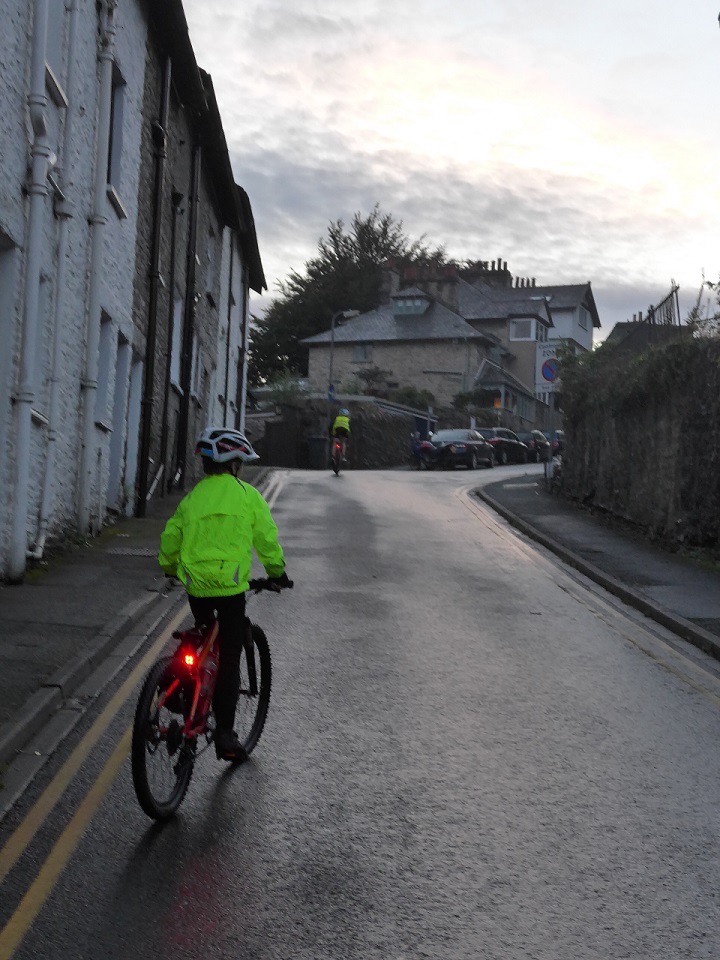
With half term behind us and the clocks gone back, the school run looks a little different now. Darker mornings and early sunsets mean it’s a good time to make sure everyone feels confident and visible on their bikes for the weeks ahead.
If you’ve been meaning to try cycling to school, there’s still no pressure to do it every day. Even once a week is a great way to keep riding through the colder months and stop it from feeling like a big deal.
Good lights, front and rear, are now essential for many journeys, along with reflective details on bags and clothing. Warm layers, gloves and waterproofs make a big difference to how much everyone enjoys the ride, and it’s worth checking tyres and brakes as wet leaves and frosty mornings arrive. Allow a little extra time, and stick to routes you know well while everyone gets used to riding in the dark.
Whether it’s the ride to the school gates, a weekend spin through crunchy autumn leaves or a festive lights ride as Christmas approaches, every journey this winter is a chance to stay active, have fun and make cycling part of family life.
Explore our guides to bike lights, winter cycling kit and route planning, and get tips to help your family keep cycling to school with confidence all winter long.
Our latest articles
Here at Cycle Sprog we're always publishing brilliant new articles, and here's a selection of our newest releases.
The best way to keep up to date with all the latest news, reviews, advice and routes is to sign up for our weekly newsletter.


Comments