Cycling with disabled children: one family’s story
For families with disabled children, the question isn't just "can they ride a bike?" It's whether they can cycle the actual journey that needs making, on the route that's available, at the time it needs doing, with everyone who needs to come, and without it going wrong in ways that make the whole thing feel impossible.
About the author
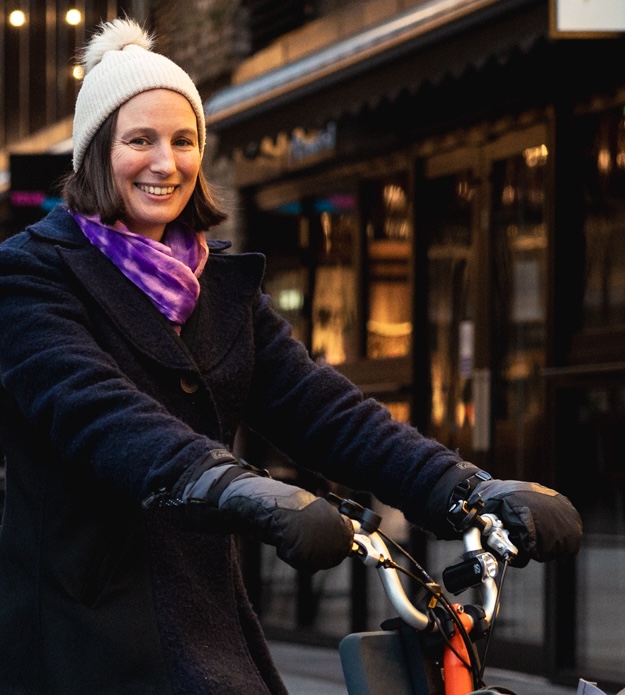
Kate is a Campaigns and Policy Lead at Wheels for Wellbeing, the Disabled People's Organisation campaigning for mobility equality for all Disabled people in active travel and multi-modal transport.
She has spent nearly two decades cycling, walking, running, catching buses and trains and, in the last five years, wheeling journeys, with varying numbers and ages of children, which inevitably ended up involving a lot of different kit and a lot of campaigning for improved accessibility! In between that, she enjoys reading, board games, gardening and playing music - and eating a lot of cake.
Cycling with disabled children: our family's story from toddlers to teens
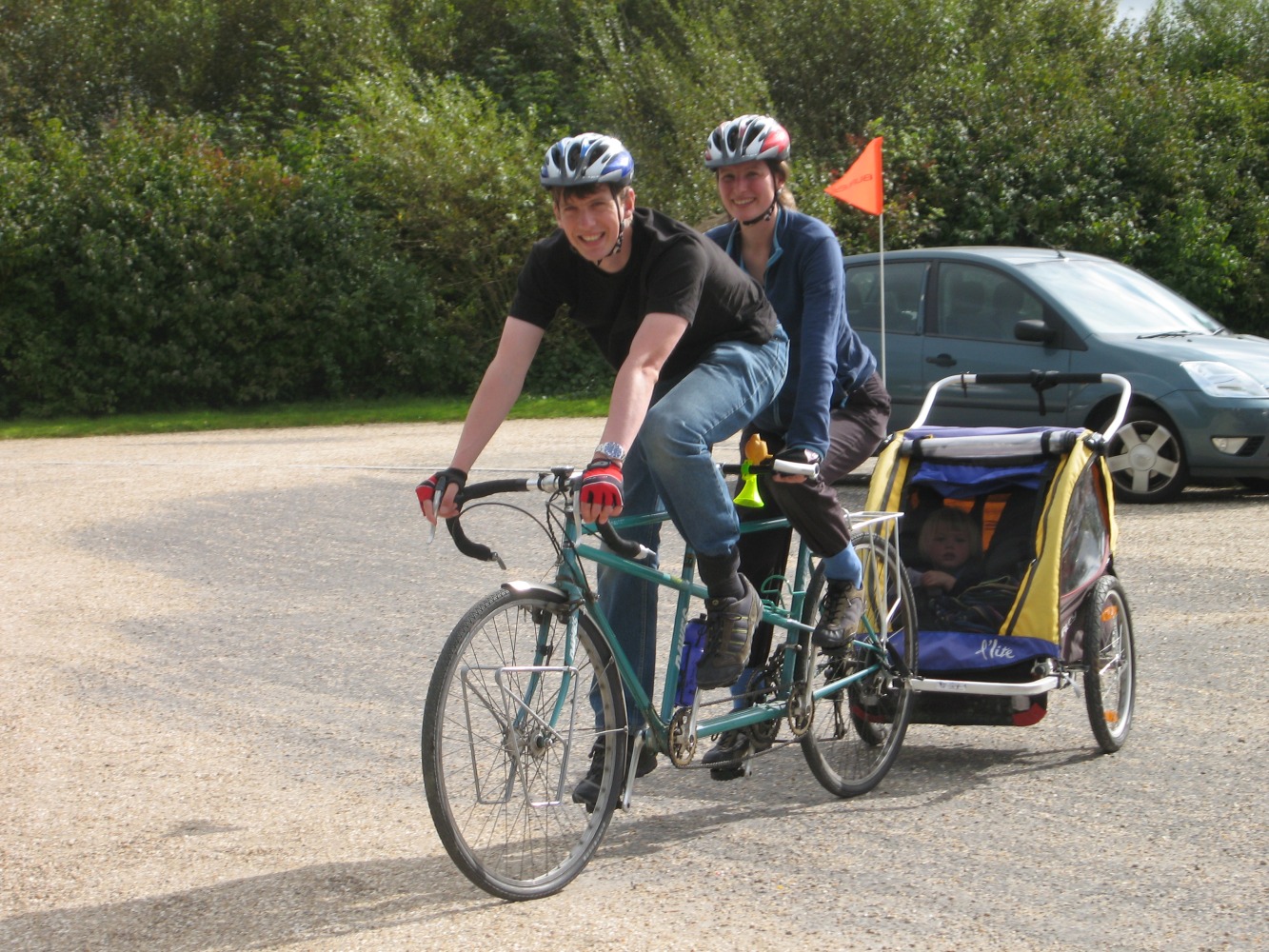
Our younger two children enjoy cycling, and can ride increasingly complex routes. Both have been cycling some trips since toddlerhood. Both are neurodivergent and attend special schools, and both can now ride their own bikes on quiet roads alongside an adult. Neither is ready to ride on their own bike on busy roads, even with adult support, but both happily ride on the back of tandems.
Both were riding balance bikes aged 3. But at this age, neither could sit next to another child in a bike trailer, or a car, bus… or sofa, because they’d become dysregulated and hurt each other. They weren’t able to sit safely in a rear child seat on a bike, either. That meant cycled journeys including Kid3 and Kid4 needed at least two adults, so I had to walk or drive most trips with all four children for a number of years. In retrospect, an e-assist cargo trike might have worked, but we didn’t manage to find out about them and source one.
Kid3 and Kid4 “could ride bikes” without stabilisers aged 5, but only in secure spaces in a quiet space with no other people around. Kid3 was injured twice crashing into fences during school cycling sessions: feedback from cycling trainers was “she can ride a bike independently”!
For riding practical journeys with Kid3 and Kid4, a rear-steer tandem helped us get started.
The adult could see and talk to the child and, critically, stop them dismounting absentmindedly when we stopped at crossings. For trips with two adults, we also had a tag-along, which Kid4 liked, but which never worked for Kid 3. We’d had a tandem tag-along for Kid 1 and Kid 2, which was fun, but a tricycle would be better!
Why "But they can ride a bike" isn't enough for disabled children
For everyday journeys it’s not about whether someone can “ride a bike”, it’s about whether they can cycle the journey that needs to be made, when it needs to be done, as many times as it needs doing, on the route that’s available, with everyone who needs to go, and without too high a risk of something going wrong, including causing excessive tiredness, meltdowns, or risky incidents.
The cycles we used with our disabled kids: a quick guide
Not sure what a rear-steer tandem is, or how a tricycle differs from a tandem? Here's a quick guide to the non-standard cycles that feature in this article.
Rear-steer tandem
A rear-steer tandem is a tandem where the captain (the adult in this case) sits on the rear seat, with the stoker (the child) on the front seat. The captain’s handlebars control the steering.
Tagalong
A tag-along is half a child’s bike that can be attached to the rear of an adult’s bike. A tandem tag-along is where two children are towed with the adult’s bike.
Trike
Trikes (or tricycles) have three wheels so are stable when stationary, unlike bikes. They come in all sizes and seating types, including upright, semi-recumbent and recumbent.
E-tandem
An e-tandem is a tandem with electric assist.
From rear-steer tandem to standard e-tandem
The rear-steer tandem was great for occasional rides, but made my joints hurt too much for regular trips.
Other issues with rear-steer were that as Kid3 got taller, I also couldn’t see over her head, and if she didn’t want to push buttons at light-controlled crossings, it got tricky.
But Kid3 loved riding and learned a lot, including to stay on the saddle until explicitly told to get off, opening up the option of a standard tandem.
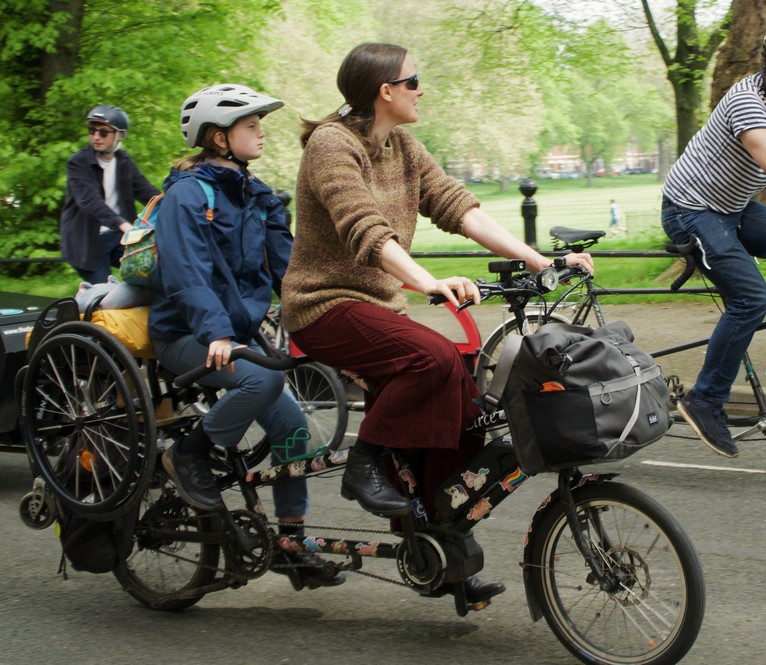
We got a Circe Helios e-tandem in 2019. It’s been Kid3’s and my main transport for 6 years, and it’s still going strong.
Trikes are not always easier
Kid4 cracked cycling alongside an adult during lockdowns, which enabled us to start cycling school runs in 2021.
Then, in 2023, Kid3 learned to ride a tricycle. Trikes aren’t necessarily easier to ride than bicycles, but they don’t wobble, and do let you stop without putting your feet down.
Having a trike let Kid3 learn to cycle local trips, first on traffic-free routes at quiet times, then busier times, then on quiet roads.
She’s learned to use gears, move off at junctions, and started to learn to interact with other people. The downside is that trikes are heavy and that affected how far Kid3 could ride.
Barriers and steep crossfalls further reduced the nearby routes we could use, too. The limits of her unpowered trike combined with inaccessible infrastructure, like barriers, started to frustrate her, compared with what her brothers could do on bikes.
Once again, trikes are not always easier!
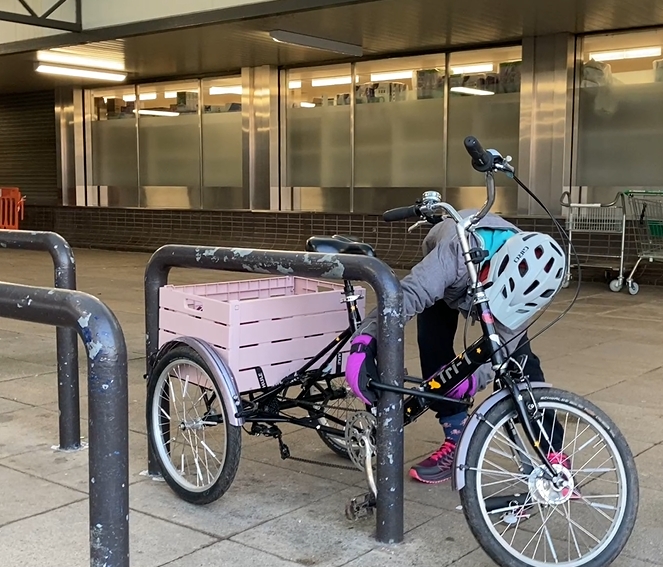
Barriers
Barriers are sometimes used by local authorities and housing associations to stop people from driving motor vehicles on paths but are often inaccessible to people on tricycles, wheelchairs and mobility scooters. Wheels for Wellbeing is an organisation who campaign for the removal of these discriminatory, inaccessible barriers.
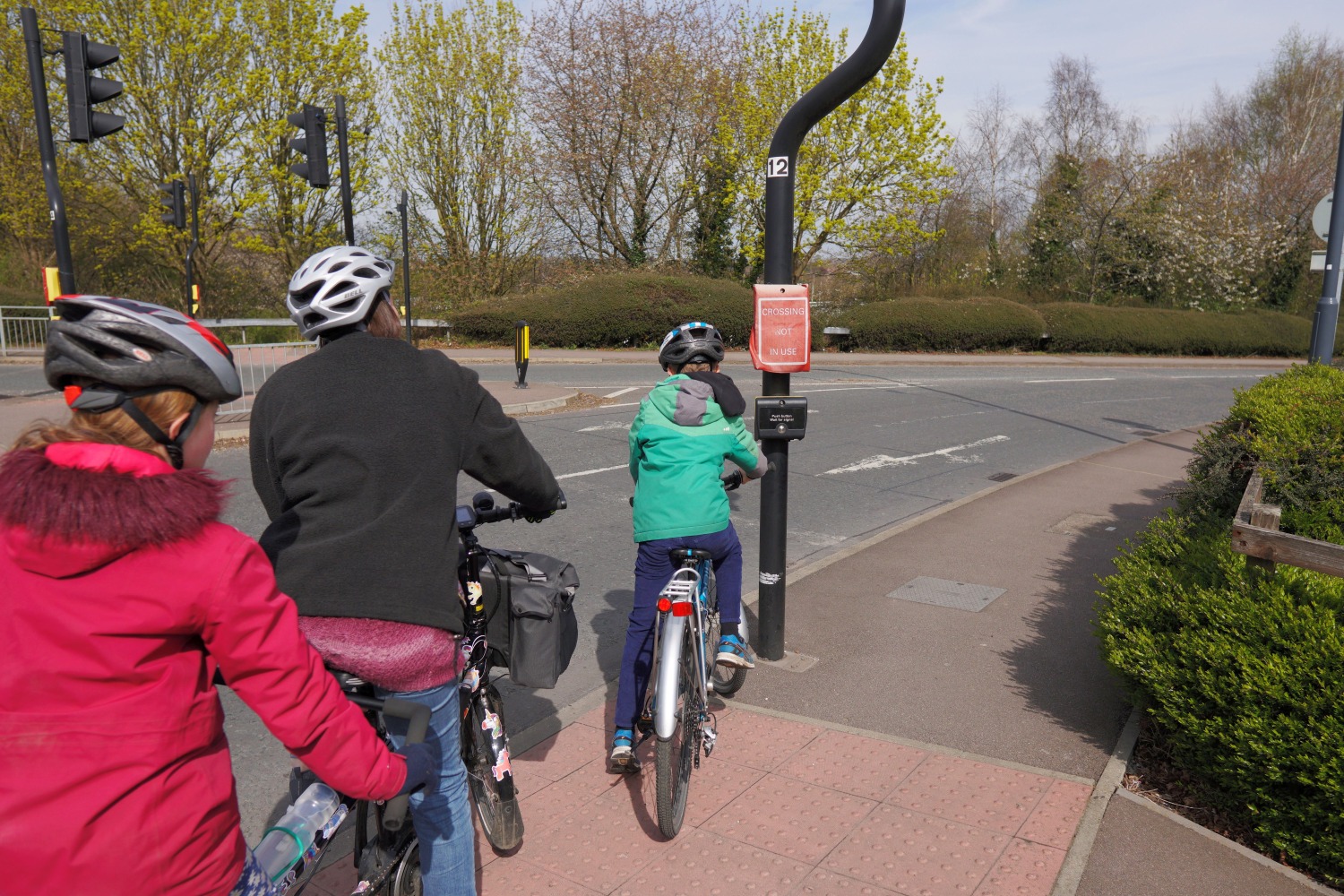
Her practice on bicycles in secure spaces, making journeys by tandem, then making solo journeys by trike meant Kid3 had learned all the skills she needed to use a bicycle for journeys this summer.
She is keeping the trike for now, because it can carry more pizzas than her bicycle!
Giving way appropriately is still challenging, she tends to stop as soon as she sees anyone else on a route if she’s worried, which makes trips quite slow, but she loves how far and freely she can go on a bike vs a trike.
I’m pleased for a number of reasons that we’ve not needed to get her an e-assist trike, which was our other option!
Top Tip: Responding to comments when cycling with disabled children
We’ve received many comments from other people when cycling with our children, ranging from “that looks great, how do you…?” to “they should be on their own proper bikes,”. We’ve found it useful to have responses ready for anything from friendly queries to unkind comments. We’ve always ignored outright abusive comments, but discussed them later with our children, in age-appropriate ways.
Riding on a multi-person cycle or person-carrying cycle is cycling. Riding on a multi-wheeled cycle is cycling. Riding on electric-assisted cycle is cycling.
The point is to have a nice time and make some trips in a convenient, sociable, low-carbon way, not to meet somebody else’s expectations. You don’t have to be on single unpowered bikes to be cycling “properly”: using trailers, tandems, trikes, cargo and e-bikes is simply choosing the right tool for the job, non-standard cycles are different from bicycles, not any less.
This wasn’t an article about disability
I’ve been Disabled with variable mobility since 2020. Our younger children have always been Disabled, although, as it happens so often, their disabilities weren’t professionally acknowledged for years. So, this article has been informed by a range of lived experiences of disability in our family.
I’ve only had space here to talk about a few things that, as a Disabled mum of four including two Disabled children, have been significant to me. These are mostly the same things that were significant for me, a non-disabled mum with four children who had no recognised disabilities at all. I hope the things that have helped us will be useful to other families who want to cycle, whoever you are and wherever you want to go.
Resources for cycling with disabled children and their families
If you'd like to find out more about inclusive cycling, the Wheels for Wellbeing Guide to Inclusive Cycling (5th Edition) is an excellent starting point, covering a wide range of disabilities, cycle types and practical guidance.
For equipment, our own guides cover many of the cycle types Kate mentions in this article:
- Cycling with older kids who have a disability or special needs
- Best tagalong bikes
- Best bike trailers
- Best electric longtail cargo bikes
Kate Ball has also authored an academic paper for Active Travel Studies entitled "Utility Cycling – Experiences Within a Disabled Family Group".
She's also written us a separate article about cycling with Kid1 and Kid2 entitled "Everyday cycling with teenagers".
Image credits
- Image of Kate in intro: Credit Loud Mobility (She's Electric)
- Image of family waiting at toucan crossing: Credit Hardy Saley
- Image of Kate and daughter on tandem: Credit Hardy Saleh
Before you go…..
We hope you enjoyed this guest post from Kate Ball. Cycling with disabled children can involve extra considerations, different equipment, and a lot of trial and error, but at its heart it raises many of the same questions every family faces: how to travel together, how to support growing independence, and how to make journeys work for the people making them.
Every disabled child, every family, and every journey is different. What works brilliantly for one person may be impossible for another, and solutions often change over time. We hope Kate's experiences offer some practical ideas and reassurance that there is no single "right" way to cycle.
Whether you're using a bike, trike, tandem, trailer, cargo bike or something else entirely, the important thing is finding what's right for you and your family.
Comments
I wish local help was available to single disabled parents who struggle to teach their own children to ride. I’m not sure if it’s an actual struggle for my children or if it’s because I’m physically impaired. I appreciate there can’t be many people like me without family support.
Unfortunately, no friends or acquaintances or family are able to offer regular support as I think “little on often” practice would make all the difference. Friends have tried a “one off” approach but don’t stick around as the children aren’t easy.
I’ve heard in other parts of the county that schools run a beginners cycle scheme to help cut down on car use.
Hi, I’m sorry to hear that you’re struggling to find the support you need. Have you contacted your local authority (council or borough)? They may be able to help you with some individual bikeability sessions for your children. Saskia